
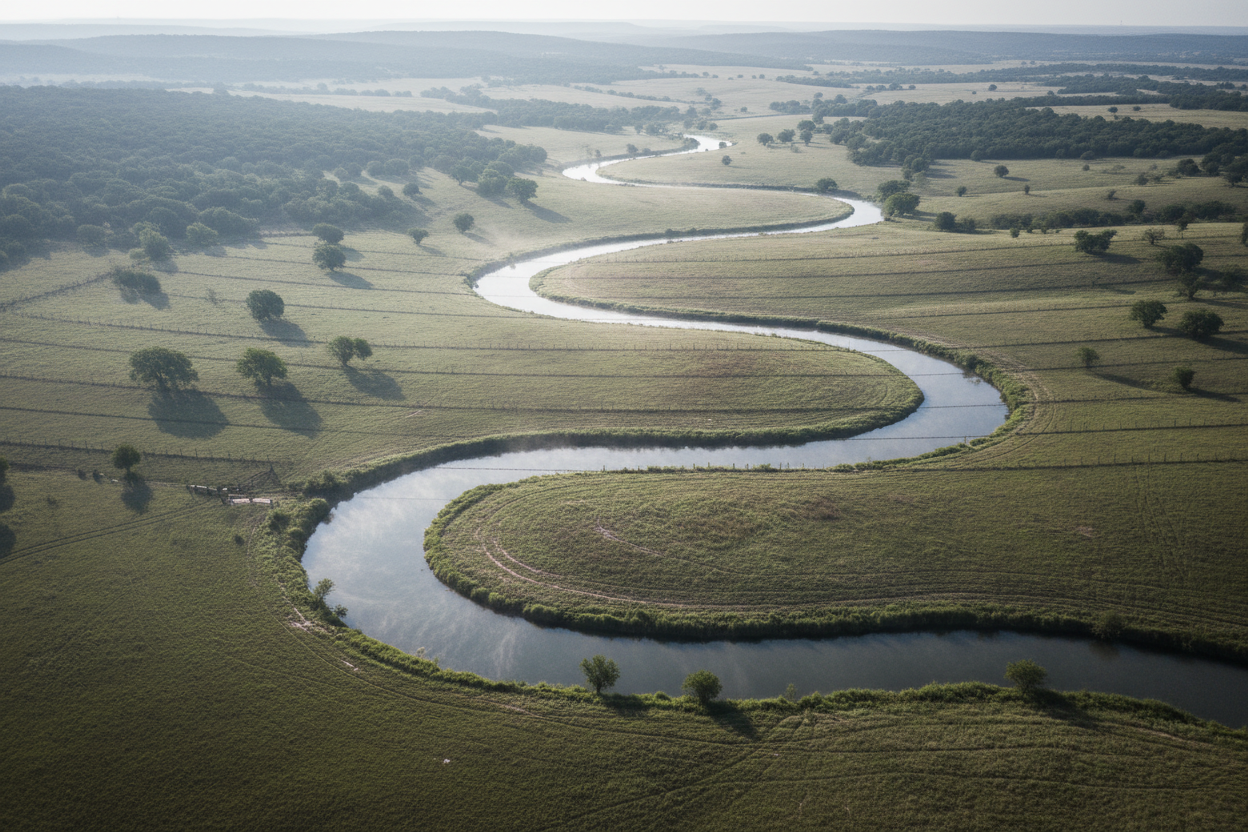
A buyer falls in love with 80 acres. Rolling hills, mature trees, perfect building site. Then they ask about water.
You tell them there's a creek running through the property. They get excited. Then their attorney asks whether the water rights convey with the sale—and you don't have an answer.
That's how deals fall apart. And it's completely preventable.
Water rights are one of the most misunderstood aspects of land ownership. In many states, owning land doesn't automatically mean owning the water on it or under it. Brokers who understand this close deals. Brokers who don't lose them.
Why Water Rights Are Separate
In the eastern United States, most states follow riparian rights—if your land touches a water source, you generally have the right to reasonable use of that water. It's relatively straightforward.
Head west, and everything changes. Western states largely operate under prior appropriation, which means water rights are separate from land ownership. Someone who's never set foot on your property might own the rights to the creek running through it because their great-grandfather filed a claim in 1892.
This isn't an edge case. In states like Colorado, Wyoming, Montana, and much of the Southwest, water rights are bought, sold, and transferred independently of land. A buyer who assumes "I'm buying the land, so I'm buying the water" could be in for an expensive surprise.
The Questions You Need to Ask
Before listing any property with water features—or in any area where water is scarce—get clear answers to these questions:
- What water sources exist on the property? Creeks, ponds, springs, wells. Document everything. A "seasonal creek" and a "year-round spring" are very different value propositions.
- Are the water rights included in the sale? This needs to be explicitly stated. Don't assume. Pull the title work and look for any separation of water rights from the surface estate.
- What type of water rights exist? Surface rights (creeks, ponds) and groundwater rights (wells) are often treated differently. Some properties have both; some have one but not the other.
- Are the rights currently in use? In prior appropriation states, water rights can be lost if they're not used. "Use it or lose it" is a real doctrine. If the rights haven't been exercised recently, they may have been forfeited or reduced.
- Are there any restrictions or allocations? Some water rights come with limits—certain acre-feet per year, specific uses only, seasonal restrictions. Know what the buyer is actually getting.
How Water Affects Value
Water can be the most valuable feature on a property—or the biggest liability if it's misunderstood.
A reliable water source dramatically increases land value, especially for agricultural, ranching, or recreational use. A property with senior water rights in a competitive basin might be worth multiples of a similar property without them.
On the flip side, a property that looks like it has water but doesn't have the rights can be nearly worthless for certain uses. A buyer planning to irrigate or run livestock needs water. If they can't legally access it, your listing just lost its primary buyer pool.
This is why water rights need to be addressed in the listing, not discovered during due diligence. Price the property based on what actually conveys.
Having the Conversation With Sellers
Many landowners don't fully understand their own water rights. They've been using the creek for decades and assume that means they own it.
Part of your job at the listing appointment is to clarify this. Ask them directly: Do you know the status of the water rights? Have they ever been adjudicated? Are they attached to the deed or held separately?
If they don't know, that's a research task before you price the property. Contact a water rights attorney or a title company experienced in your state's water law. The cost of clarity upfront is nothing compared to a deal falling apart at closing.
Talking to Buyers About Water
Sophisticated land buyers—especially those from western states—will ask about water rights early. Be ready.
Have the documentation available. Know the source, the type of right, and any limitations. If the rights are strong, make it a selling point. If there are limitations, explain them clearly so there are no surprises.
For buyers unfamiliar with water rights, educate them. Explain how the system works in your state. Help them understand what they're actually buying. A buyer who feels informed trusts you more than one who feels like they had to figure it out themselves.
Water Is Only Getting More Important
Drought, population growth, and competing demands are making water more valuable every year. In parts of the country, water rights are appreciating faster than the land itself.
Brokers who understand water law have a significant advantage. They can identify properties with hidden value. They can prevent deals from collapsing over issues that should have been addressed upfront. They can advise clients with confidence.
Water isn't a detail. It's often the whole point.
This is one of the critical topics covered in The Land Broker's Definitive Glossary & Field Handbook—100 terms every land professional needs to know, explained in plain language. Available through Landverse AI.